

By Sofya Firsakova and Shiri Atsmon
Wherever you look in the supermarket, the items you pick up to care for yourself will be enveloped by plastic: toothbrushes, soaps, shampoos, cosmetics, sunscreens, deodorants. With plastic manufacturing companies peddling empty promises, we need to take it upon ourselves to make the switch to better alternatives. For this reason, this month’s topic centres on personal care, and how to practice self care while also caring for the environment.
The problem
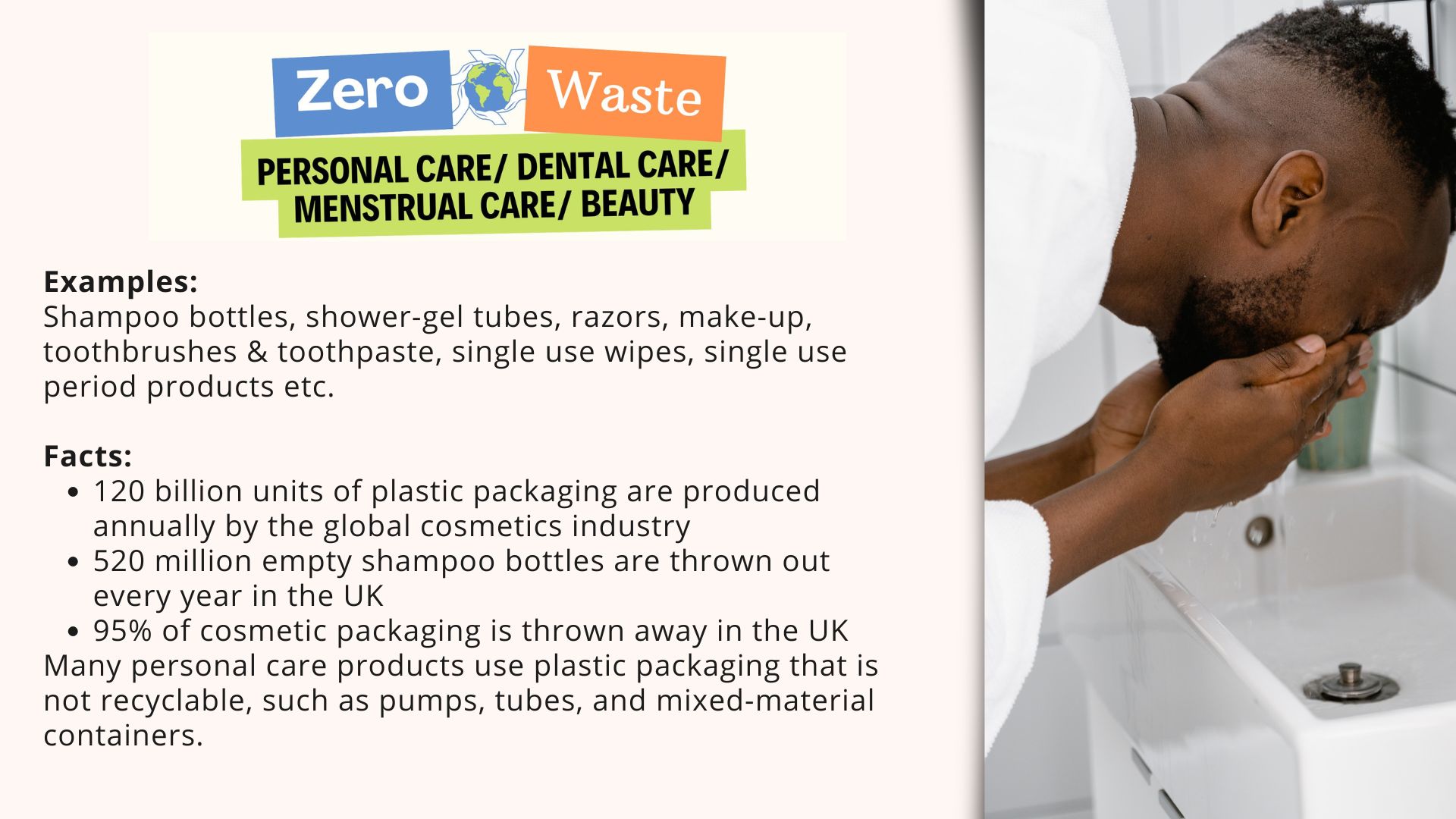
In the UK alone, we throw away 520 million shampoo bottles and 468 million spray bottles every year. According to the British Beauty Council, only 14% of all packaging actually makes it to a recycling facility, and only 9% is recycled, with the rest headed directly to incineration or landfill. The slide below elaborates on the issues further.
A Quick Overview
Making the most of what you have
The first step is making the products you already have go a long way. Small things like rolling up toothpaste when it’s near the end and cutting open tubes ensures minimum product is wasted, and you re-purchase it less often. Fill up shampoo bottles with water to get the remaining shampoo out.
Use your products more sparingly. Some products that people commonly use too much of include shampoo, face wash and toothpaste (you only need a pea-sized amount – the full strip of toothpaste you see is just to make it look good for ads!)
Convenience is key
Below are a few easy replacements to cut out unnecessary packaging. Choose a few to try on your next restock.
- Deodorant -> Fussy, a refillable, natural and cruelty-free deodorant
- Shampoo -> Shampoo bars, which are just as effective! For example, LUSH has a very wide and exciting variety, but cheaper options can be found at your local Boots, such as Garnier’s Strengthening Shampoo Bar
- Disposable razors -> reusable razors with replaceable heads. An even better option would be using ones made from sustainable materials, such as bamboo, in the first place. You can take a look at some of the options here.
- Body wash -> scented soap bars or refillable body wash
- Skincare -> try to buy the option with glass or aluminium packaging. If your favorite provider doesn’t offer recyclable packaging yet, urge them to do so.
- Plastic toothbrush -> bamboo toothbrushes. The bristles should be made from nylon and a soft to medium bristle head will avoid damaging your gums. Buying an electric toothbrush and swapping the heads is also a more sustainable option than replacing a manual toothbrush often.
Investments to make
- Buying products in bulk and decanting into smaller bottles saves both money and plastic. More and more companies are providing refillable options for skincare and makeup.
- Instead of pads and tampons, take a look into reusable period products such as menstrual cups and reusable pads. Swapping to a menstrual cup would save you roughly £1000 of period products a year. More advice on Environmenstrual’s website.
One last tip to help you recycle more
Place a recycling bag in your toilet to ensure it is just as simple to recycle as it is in the kitchen.
A Quick Summary
This slide is a useful summary of the actions you can take. Refusing samples, reducing the amount of new materials bought and reusing existing packages are just some of the ways to alleviate the problem.

Tune in to our very own zero-waste webinar. Fast forward to minutes 1hr16min where we discuss zero waste personal care in more detail.
Nation-wide campaigns and resources
Check out some of the campaigns below. The websites provide valuable information and an easy way to share it with your community.
- Environmenstrual week, a campaign by WEN, runs between the 21st – 25th October to raise awareness and demand healthy, safe, and sustainable periods.
- Another inspiring campaign is Plastic Free July. The movement’s website is very colourful, engaging and informative, offering lots of ways to cut out plastic whether you are a school student or a business owner.

Final Thoughts
Implement as much of the advice as you can, for example by starting with the most simple and cost-effective tips, such as prolonging the life of the products you already have. Don’t hesitate to share the information with friends and family to inspire collective action!
 Eco Show and Tell