
By Sofya Firsakova and Shiri Atsmon
Open your cleaning cupboard and you will see an ocean of plastic bottles. Moreover, our home houses not only us – but so many items from big to small, which we constantly buy and dispose of.
This month’s blog is all about simple, sustainable swaps and ideas to help make caring for your home more environmentally conscious. Let’s discuss ways to reduce waste associated with cleaning products, furnish your home without overly relying on newly-made soft furnishing and furniture and even give your belongings a second lease of life as part of your decluttering efforts.
A Quick Overview
The Problem
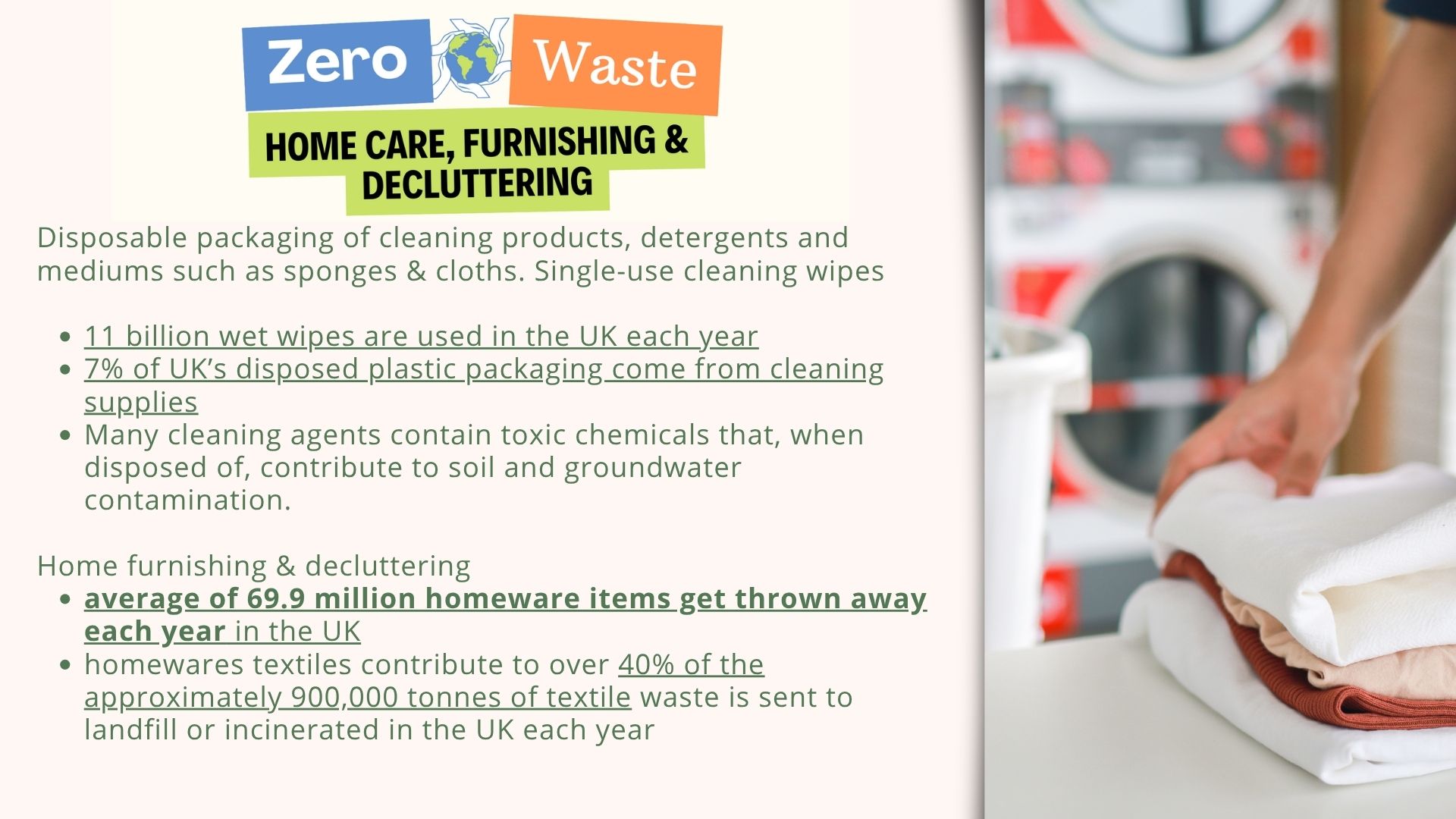
Amid the chaos of everyday life, it’s often difficult to give much thought to the sustainability of the home care products we choose. The packaging they come in adds to plastic waste. Not only are eco-friendly products better for the environment, but they are also safer to use around pets and children, as well as anyone in the household with sensitive skin. The slide above reveals even more information regarding the extent of the damage caused to the environment. When furnishing your home, it can be fun to follow trends and deck your home up in a way that follows suit. Unfortunately it is this habit that drives “fast homeware”.
Simple steps we can take
Reuse
The simplest way of reducing waste is sticking to reusable products. Use a mop or a cloth instead of single-use antibacterial wipes. Choose biodegradable materials when shopping for these, such as using cellulose or cotton-fibre sponges over synthetics ones and cut up old t-shirts to use for wipes. Use old toothbrush heads for cleaning small areas like grout lines, faucets and crevices. In doing so, you reuse an item as well as avoid purchasing new cleaning tools.
When I was a child, I would always get excited finding the same biscuit boxes, only to be disappointed when I realised it’s full of sewing materials and cloth. Nowadays, I’m following in the footsteps of my parents. Keep glass jars from jams and pickles to store household items such as screws, nails or buttons.
Another tip is to try your best to repair broken items before replacing them. There are plenty of online tutorials for fixing items such as broken vacuums, chairs or tables.
Getting Rid of Unwanted Items
One of the biggest challenges in making home care and furniture more sustainable is figuring out how to handle unwanted items. Too often, old furniture is simply left on the roadside or fly-tipped, contributing to waste.
One way to ensure your home furnishings are properly disposed of, especially if the item is large and unusable, is through scheduling a chargeable collection by Barnet.
For cheaper (even profitable) methods of getting rid of items, Facebook marketplace is a great place to start. It allows you to buy, sell or trade products flexibly and locally. If you’re just looking to get rid of the item, you can make the item free and someone desiring it can come to pick it up. In a similar way, Olio and Freecycle also facilitate the disposal of furniture by connecting individuals who want to give away furniture with those seeking it. You can also drop off your items to charity shops that take in furniture such as The British Heart Foundation – they might even come to collect these items from you. Vinted app offers lovely soft second-hand furnishing, you’ll get exactly what you wanted but minus the guilt associated with frequently updating the look of your home.
Where to shop
You can obtain many items cheaply by buying second-hand. As already mentioned, Facebook marketplace, Olio, Freecycle and charity shops allow you to buy and sell furniture, as well as household items. Barnet Furniture Centre is amazing selling affordable second-hand furniture in person and online via eBay.
In terms of items that get used up, aim to buy products in refillable containers. The Impact Store in East Finchley has a range of refillable options such as detergents, as well as eco-friendly home living essentials like kitchenware, loo roll and compostable waste bags.
Getting Creative – make your own cleaning products
Home-made cleaning solutions are often easier and cheaper than store-bought ones. Many ingredients will already be in your pantry! Water and vinegar form a natural cleaning solution that’s perfect for cleaning windows, steel plans, grout and fridges. A combination of boiled lemon juice and salt can also be effective in removing stains. Leave the item to hang in the sun after soaking in this mixture, and the stain will bleach naturally.
DIY creations can even be more effective than store-bought ones. For example, vinegar is a non-toxic and safer alternative than bleach for mild mold treatment. It’s also a better choice for treating mould on porous surfaces, as it can penetrate deeper and reach the roots.
In her book Clean & Green, Nancy Birtwhistle offers 101 hints and tips for a more eco-friendly home.
Easy switches
- Avoid single-use plastic bottles – aim to buy in bulk or concentrated form to cut down on plastic used. We love the brand Ocean Saver, which offers cleaning pods that you put in any empty spray bottle you already have, then add water to and after a shake you have a new cleaning product. This brand is widely available too!
- Many cleaning products can be bought in 5L bottles and then be decanted into your existing smaller bottles. The 5L bottles can be easily upcycled or distributed in the community through Freecycle.
- Rather than picking up aerosol sprays, use essential oils or home-made sachets, such as lavender ones, to freshen the air.
- Avoid disposable gloves and chaos reusable rubber or silicone ones that can be washed and reused.
- Choose the sustainably packed or less packaged option at the shops. This way you reduce your personal amount of waste whilst supporting companies that prioritise the environment.
- When buying laundry detergent, opt for ones free from artificial dyes and fragrances. Some potentially harmful chemicals to avoid are: formaldehyde, phosphates and dioxane.
A Quick Summary
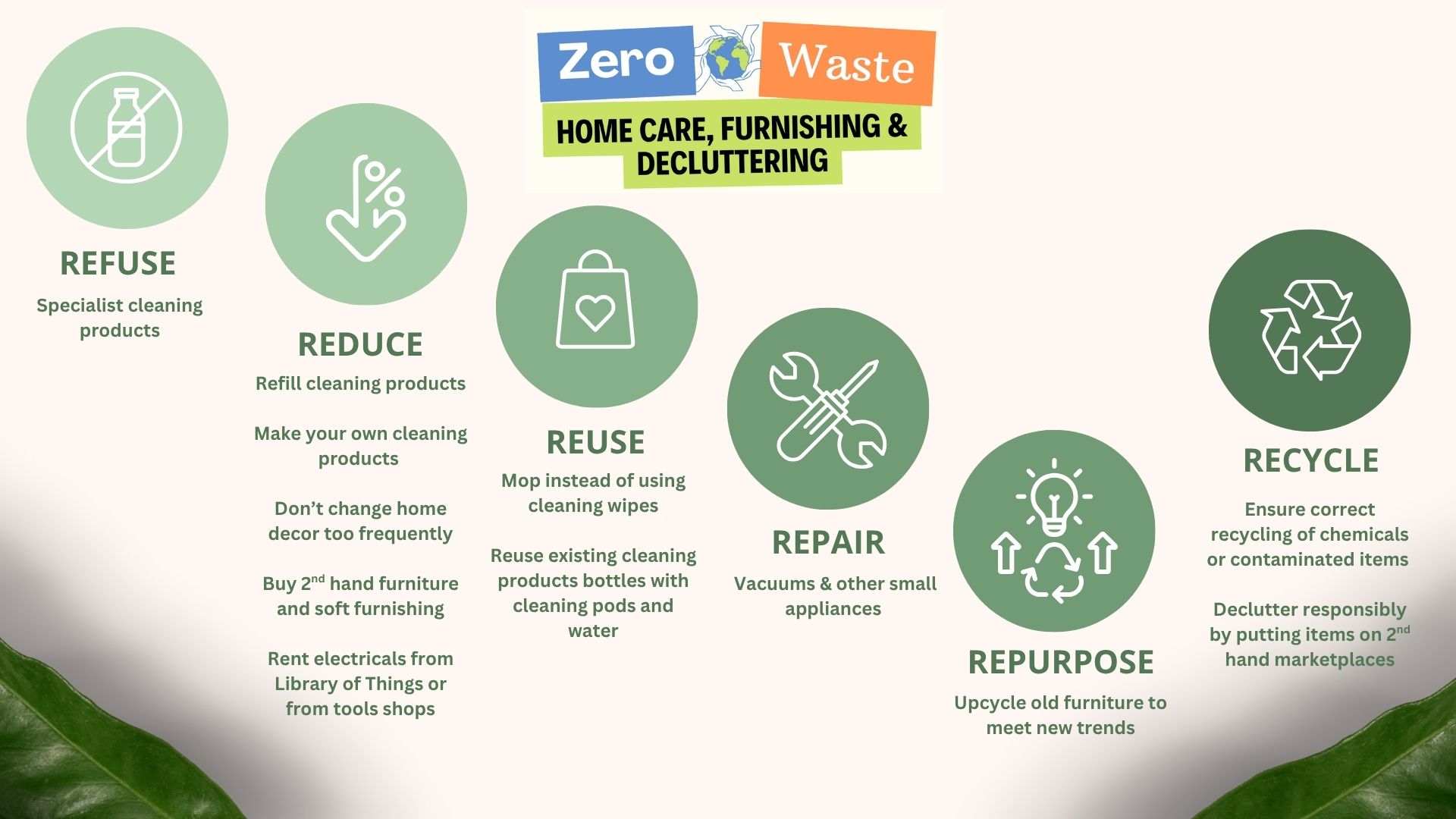
This slide is a useful summary of the actions you can take. Starting with refusing specialist products, and showing some ideas of how we can reduce detrimental waste through reducing, reusing and repairing, it efficiently summarises the steps we can follow to be more sustainable in our homes.
More Ways to Get Involved
Glance at the slide below for ideas on how to inspire action in your community. Communities hold the greatest power to spark meaningful change, so don’t be afraid to reach out to friends with tips you have learnt or experimenting with making your own cleaning products with them.

Further ideas/ links to involve your community include:
- Demo a variety of ways to reduce plastic packaging in cleaning products, such as using cleaning pods, 5L bottles (from Impact Store in Finchley or online) or “send packaging back” solutions
- Do the Cleaning Bin Bag Challenges as a group, keep supporting and motivating one another
- Put together an upcycling workshop for your community, in Barnet you can invite one of the sustainability creatives listed on our directory (scroll to the bottom)
- Invite your community to repair their furniture at a Repair Cafe. In Barnet there are monthly sessions in Wesley Hall (High Barnet) and at the Friern Barnet Community Library. In addition, Barnet Council organises such sessions quarterly, get notified via the BarNETZERO newsletter.
- Organise a make-your-own cleaning products workshop, in Barnet this can be hosted by the owner of the refill Impact Store
- Visit a re-use furniture centre, in Barnet it would be the Barnet Furniture Centre in Friern Barnet. Not too far from Barnet you’ll find NLWA’s ReUse Shop at Edmonton.
National campaigns
While there isn’t a campaign targeting eco-friendly cleaning just yet, we found the following campaigns that might be relevant:
- Upcycling Day (EU) 24th June 2025
- Spring Clearing Week 17th- 23rd March 2025 by Association of Professional Declutters APDO
- National Organising Week APDO September 2025
- Buy Nothing New Month by Keep Britain Tidy, November each year
Additional resources
Do you still have some unanswered questions? Perhaps these links can be of help, they provide guidance on topics we didn’t get to go into in detail.
- How to declutter your home sustainably
- Decluttering without landfill
- Cleaning section on the Bin Bag Challenge
Final Thoughts
While it may not always be possible to completely change out your cleaning products, experiment and figure out which options work best for you. Reuse as much as you can, try to make your products last longer and opt for easy switches at the shops. Remember to share your ideas with friends and family to maximise the impact. When it comes to furnishing your home, using what you have and buying second hand will save you money, and getting new-to-you is now much easier with the abundance of charity shops and online websites and apps that specialise in second-hand items.
 Eco Show and Tell
