
By Sofya Firsakova and Shiri Atsmon
While many are aware of food waste as an ethical issue, we find that the environmental aspect of it is sometimes overlooked. This month’s highlight will guide you through a variety of ways to reduce your carbon footprint in food-related ways, many of which will also help you save money!
A Quick Overview
The Unappetising Truth
If food waste were a country, it would be the world’s third biggest contributor to greenhouse emissions. This stems not only from the release of methane gas when food breaks down at landfill sites but also from the land cleared to make space for resources used to produce food (much of which ultimately goes to waste). Whilst large companies play a significant role in this, we as individual consumers are far from blameless. European households are responsible for an estimated 53% of all food waste in Europe.
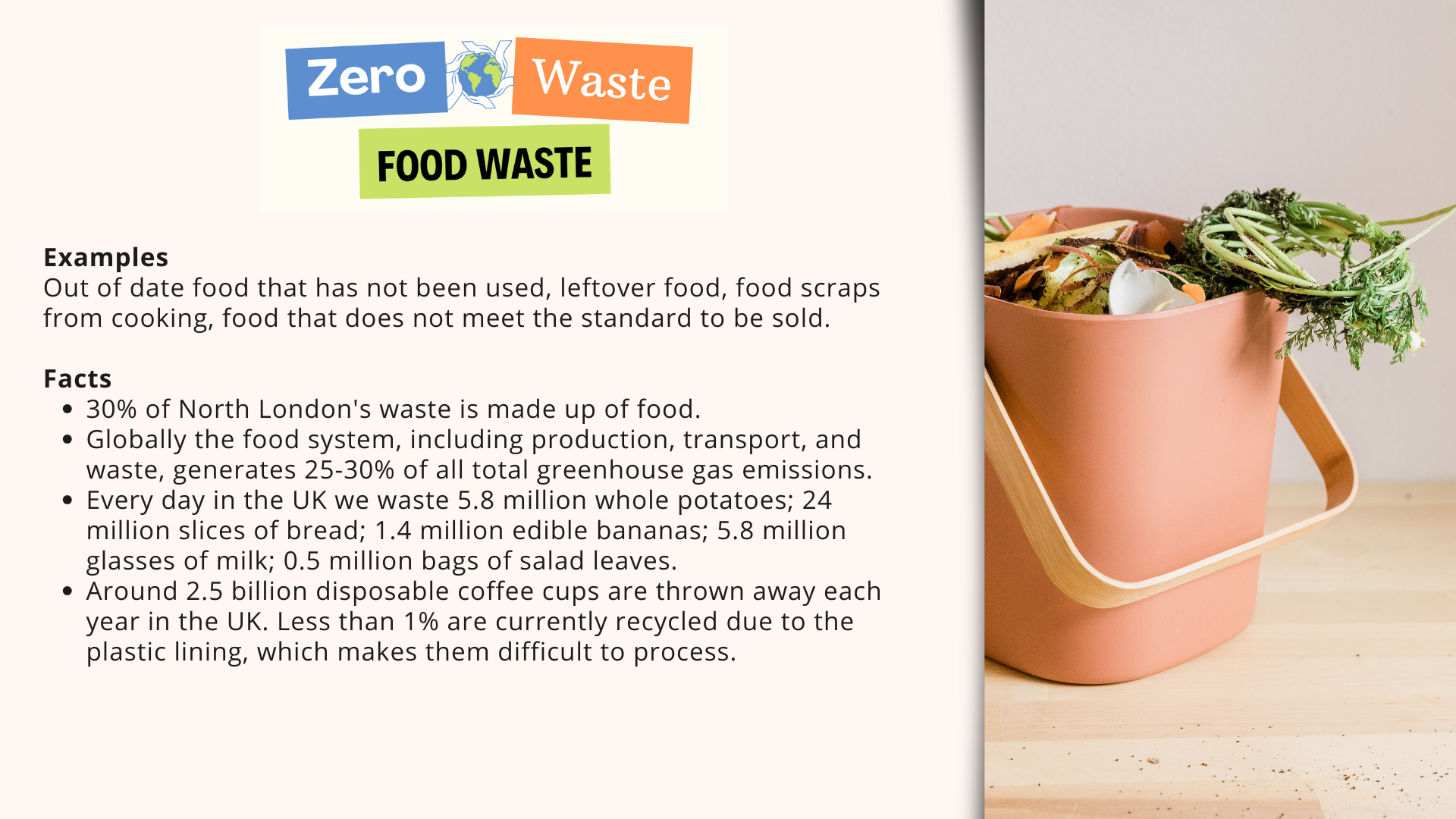
The silver lining in this statistic is that individual and local action can create meaningful change. By making more conscious decisions, we can have a significant impact on reducing food waste. Out of date food that has not been used, leftover food, food scraps from cooking and food that does not meet the standard to be sold are all aspects of the problem that require us to rethink how we handle them.
What Steps Can You Take?
Think Before You Bin and Use Up Everything In Your Fridge
The most important step is using up what you already have. I really recommend SuperCook, a zero-waste recipe generator that figures out what you can cook with the ingredients already in your fridge, even from a seemingly random combination of items. It’s also important to pay attention to which ingredients are nearing the end of their lives and move them to the front of the fridge to make sure they’re not forgotten. Although Barnet currently doesn’t have food waste recycling bins, there are lots of options for what to do with food scraps. Today’s scraps could be tomorrow’s soup, stock, or sauce!
Befriend Your Freezer!
If your vegetables (which are the most commonly wasted food) are known to languish in the fridge looking sad and forgotten, chuck them in the freezer. Here are a few examples of the best ways to store foods in the fridge:
- Vegetables: dice fresh onions, peppers, chillies, leeks and herbs and freeze them flat. Blanch all other veggies (i.e. cook them sliced in boiling water for approximately 2 to 4 min until they are al dente) before you freeze them.
- Eggs: freeze the whites when you just use the yolks (write how many there are) and keep on adding until you have enough to do meringues or financiers.
- Cheese: freeze camembert and hard cheese. It’s best to grate them first if you will only use a handful at a time.
- Ginger: grate it and freeze it.
- Milk in cartons can be frozen unopened if there is a gap between the milk and the lid.
Meal Planning and Making the Best Use of the Food You Have
Knowing which foods and how much of them I will need in a week significantly reduces my waste, but also the mental load of shopping trips. Before going on a shopping trip, make a list of meals for the week and plan the shop around it. Checking portion sizing on packaging can help buy the correct amount. Even if a batch of food ends up too big by accident, make sure to use up any leftovers. For example, leftover curries and salads make amazing wraps.
Olio and Too Good to Go
Too Good To Go is an app that saves unsold, surplus food. They rescue perfectly good food and you can pick it up in a variety of nearby participating stores, such as coffee shops, supermarkets and food stalls. Not only is it sustainable, but you also receive up to 50% off retail price, with many stores throwing in greater quantities of food than you would expect. My best find has been two very full bags of fruit and vegetable for £2 at a local veg shop, and a quick glance at my app right now shows that I can get a surprise mix of Costa menu items worth £11 for £3 amongst many, many other options. The Olio app works in a similar way, by letting you pass on what you no longer need to people who live nearby. You can also get free food, especially between 8pm-10pm, as many supermarkets pass on their unsold discounted items to Olio’s “Food Waste Heroes.”
The Simplest Changes
We understand that time and energy are big factors influencing how we deal with food, so below are some quick and simple changes you can implement.
- Buy wonky/odd foods in shops or from Oddbox
- Take photos of your cupboard/fridge before a food trip to avoid duplicating items
- Keep a notepad by your cupboard to write down the shipping list as you run out
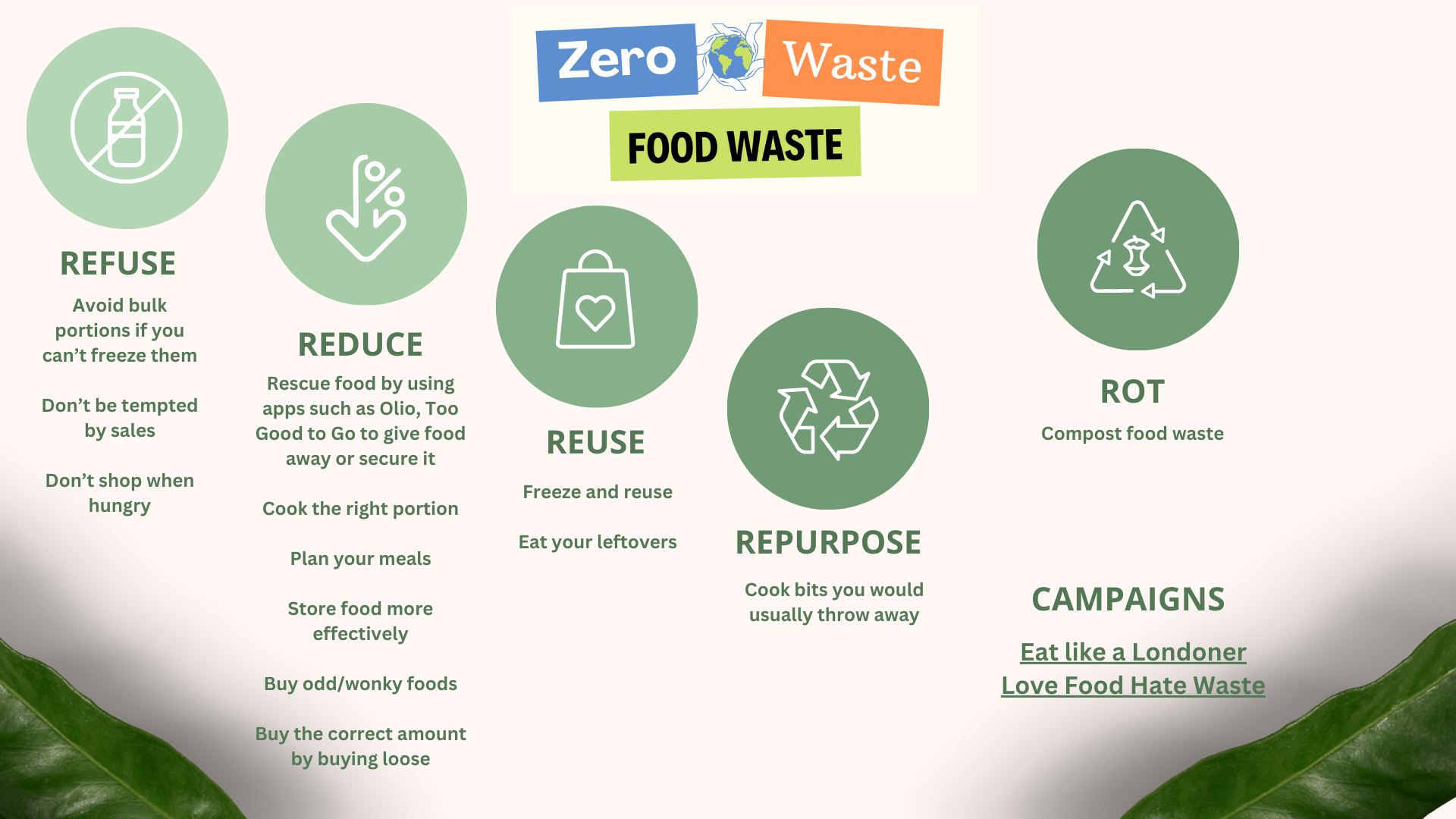
The photo below gives some more ideas from us on how to reduce food waste. They are shown underneath the 5 R’s of recycling: refuse, reduce, reuse, repurpose and recycle. You can also check out the “Eat Like a Londoner” and the “Love Food Hate Waste” websites for practical and helpful ideas and food-waste recipes.
Tune in to our very own zero-waste webinar. Fast forward to minutes 42:30 to 50:40 where we discuss the above ideas in more detail:
More Ways to Get Involved
Below are further ideas to reduce food waste. They range from quick activities to have a go at whenever you have a spare minute to ideas of events you could involve your community in:
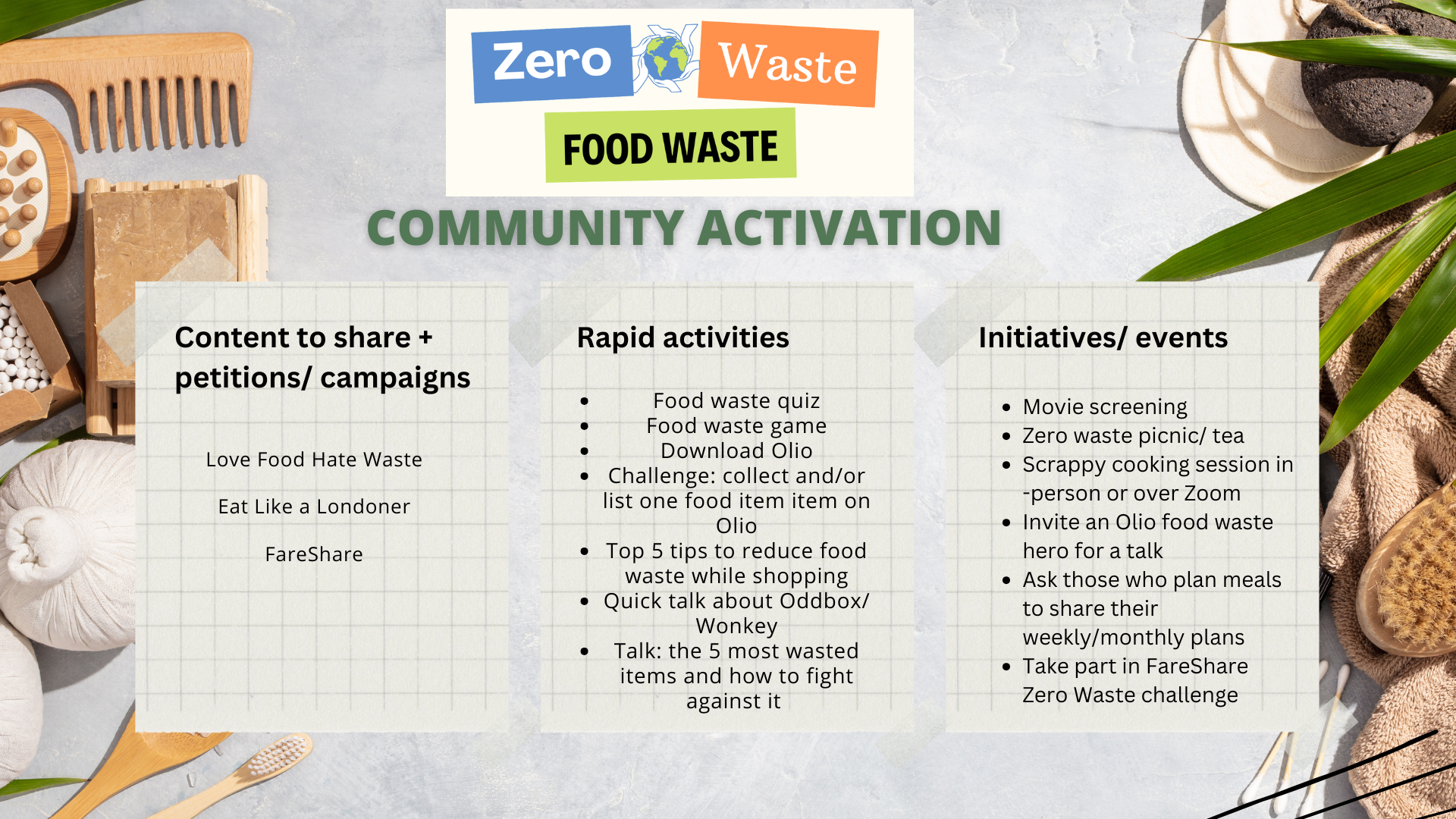
Further ideas/ links to involve your community include:
- Movie screening – here are some ideas for documentaries that tackle the issue of food waste. A framework for getting the community together to watch environmental documentaries is offered by The Week.
- Zero waste picnic/ tea
- Scrappy cooking session in -person or over Zoom, here are some recipes to inspire you
- Invite an Olio food waste hero for a talk
- Ask those who plan meals to share their weekly/monthly plans
- Take part in FareShare Zero Waste challenge – you can even use this as a way to fundraise
- Sign up to the Love Food Hate Waste resource library and you’ll have access to lots of resources you can use for your groups: including tested messages and facts about food waste, and printable materials.
- Food Waste Action Week in March is another great change to get involved and help raise awareness of the importance of tackling the food waste issue, together
- Do the six-week long Food Waste Bin Bag Challenge as a group, keep supporting and motivating one another
Barnet, London & National campaigns and specialist websites
We’ve rounded up some helpful resources which provide expert guidance on reducing food waste. Look through these for actionable advice and inspiration.
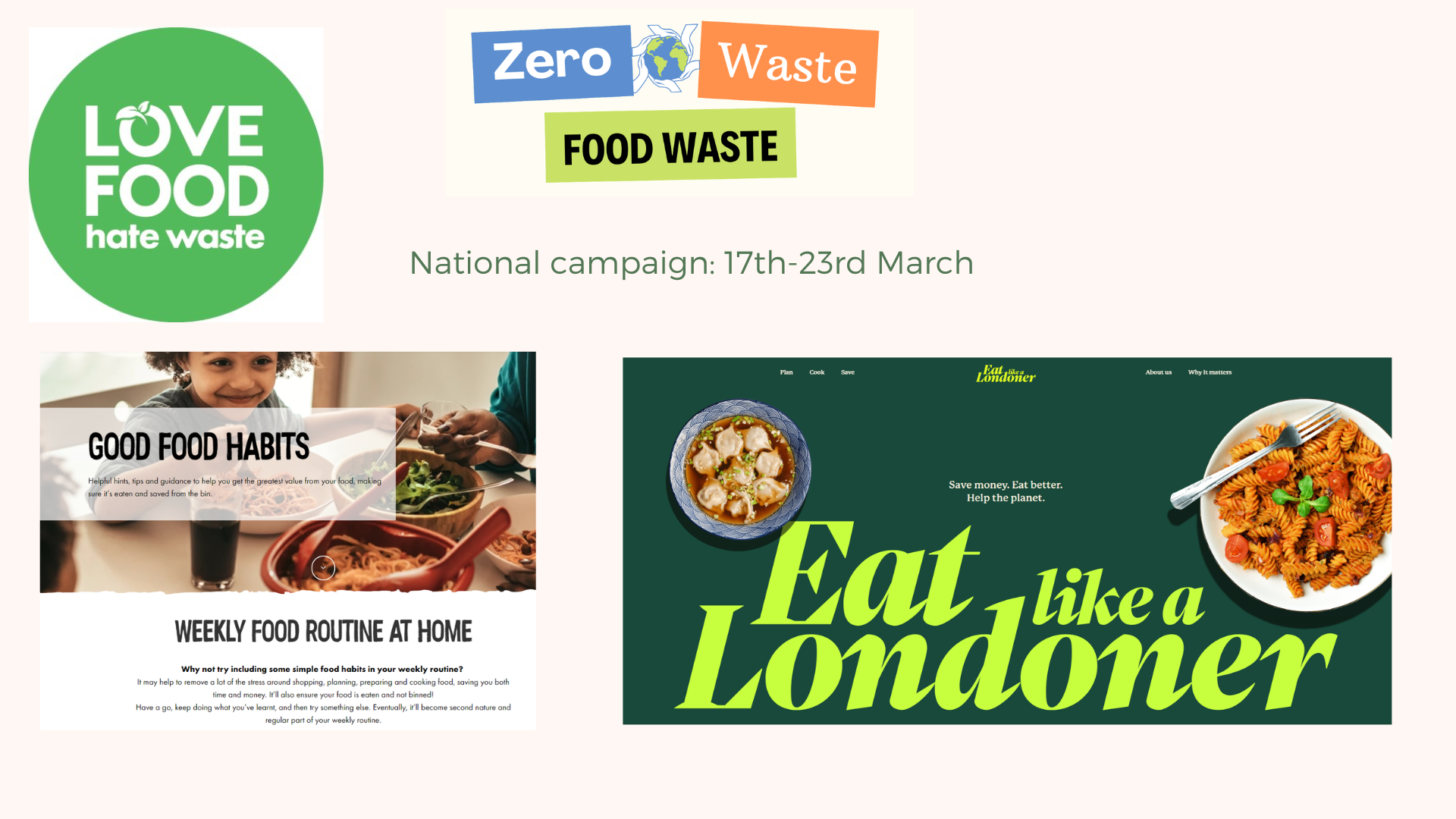
- Take action during National Food Waste Week 17 –23 March 2025
- Do you belong to Barnet’s food sector and/or have an interest in food economic, environmental and social sustainability? Join Barnet’s Food Partnership
- Learn more about North London’s food waste issue on NLWA’s website
- London’s Food Waste report from WRAP
- Learn what action is taken by London’s businesses through the reports from ReLondon
- Get inspired by the content on the Love Food Hate Waste and Eat Like a Londoner websites
- Read about the good work done by FareShare
Additional resources
Do you still have some unanswered questions? Perhaps these links can be of help, they provide guidance on topics we didn’t get to go into in detail.
- The impact of food waste and 10 tips
- The Bin Bag Food section
- UK facts from Waste Managed
- Meal planning
- Saving food from the bin
- Buy just what you need
- Store food more smartly
- Don’t always go by date labels
- Leftovers and wilted food recipes https://www.nlwa.gov.uk/sites/default/files/inline-files/north-london-food-lovers-cookbook.pdf and https://www.binbagchallenge.com/post/don-t-give-up-on-wilted-veggies
- Freeze food
- Eat peels and scraps
- Bread
- Potatoes
- Recycling food waste: compost
Final Thoughts
Small and consistent changes, like moving items to the front of the fridge and remembering to freeze them before they go off are the most important in contributing to a more sustainable future. Try to fit a manageable amount into your routine and commit to them. Don’t hesitate to share these tips with friends and family to help create a meaningful collective impact.
 Eco Show and Tell